Are you stuck in a rut because of you are unwilling to forgive yourself? To forgive yourself or to forgive someone who has wronged you; either way, forgiveness does not come easy. However, having received God’s forgiveness, we are called to forgive.
Jesus was despised, rejected, and ridiculed. His hands and feet were pierced for our transgressions; yet while hanging on a cross, He says to His father—out of love for us: “Forgive them, for they do not know what they are doing” (Luke 23:34). Jesus gave his life for us, to cover our sins, yet that does not release us from the command to forgive. That also means we are to forgive ourselves.
Let us take a moment to look at Bathsheba’s life, and what unforgiveness may have cost her, and what forgiveness and faith restored to her.
David spotted Bathsheba bathing outside while he was walking on the roof of the palace. She was married to Uriah, a Hittite, a soldier, and a dedicated man of God. Yet David summoned Bathsheba to the castle, and she slept with him (2 Samuel 11:3-4, NIV). I am sure she had regrets the following day. She probably paced the halls of her home and wondered how she would face her husband—who was at war—knowing what she had done.
Then, as a consequence and reminder of her night with the king, she became pregnant. “How could I have been so foolish,” she must have uttered to herself many times. “He’s married, I’m married,” logic told her after the fact. Then she got word that her husband had been killed in battle. The guilt immediately compounds. The Bible tells us that she mourned for her husband (v. 26), and after her mourning was over, David took her as his wife (v. 27).
I am convinced that her short time of mourning, as described in the Bible, lingered on in her heart. She might have also wondered if David had her husband killed in battle so that she might live and not be stoned (for her act of adultery). As much as David tried to comfort her, I am sure she found it difficult to forgive herself. The stress and unforgiveness of betraying her husband, sinning against God, and listening to the other wives of David speak of her despicable act, took its toll. Then, after giving birth, 2 Samuel 12:18 says: “…on the seventh day it came to pass that the child died.”
I believe that even though David had to be confronted by Nathan the prophet regarding his sin (12:1-14). Bathsheba’s conscience confronted her. Her sin was so heinous before God that her name was not mentioned in the lineage of Jesus (Matthew 1:6 NIV). She was listed as “wife of Uriah.” However, at some point between the loss of her firstborn and the birth of her son, Solomon, she had forgiven herself and had gained the respect of Nathan the prophet (1 King 1:11-27).
I am also convinced that Bathsheba realized that unforgiveness would keep her from living her life to its fullest. It was her son Solomon that was destined to rule Israel after the death of her second husband, King David. And if Solomon was any indication of the type of mother she was, we can definitely say: ““She had found God’s grace.”
When the Lord appeared to Solomon in a dream and asked, “What shall I give thee?” (1 Kings 3:5, NKJV). Solomon asked for a wise and understanding heart to be able to judge his people fairly (3:9). Unless his mother had become a wise and virtuous woman—able to forgive herself and others—how else would she be able to raise a son who loved the LORD, and walked in the statutes of his father David (1 Kings 3:3)—despite the examples set by David’s other children.
There is life and life more abundantly in being able to forgive yourself. To forgive is to release or pardon an offense, never to bring it up again. It’s releasing the desire to keep blaming ourselves, and accepting God’s grace and mercy.
Your Call to Order
To obtain order in this area of your life, pray and ask God to help you forgive yourself—whether you believe you are worthy of it or not. Then, if another person was involved, ask them to forgive you. Think of what you can do to be kind toward them, tenderhearted, and loving just as God is toward you.
The consequences of not forgiving yourself for the mistakes you have made are many; bitterness is one, and depression is another. But know in your heart that God’s mercy is waiting to forgive you upon your request. Like Bathsheba, when you choose to forgive, Satan no longer has a foothold blocking the blessings God wishes to bestow upon you.
Power Verses:
The Lord is gracious and full of compassion, Slow to anger and great in mercy. ~ Psalm 145:8
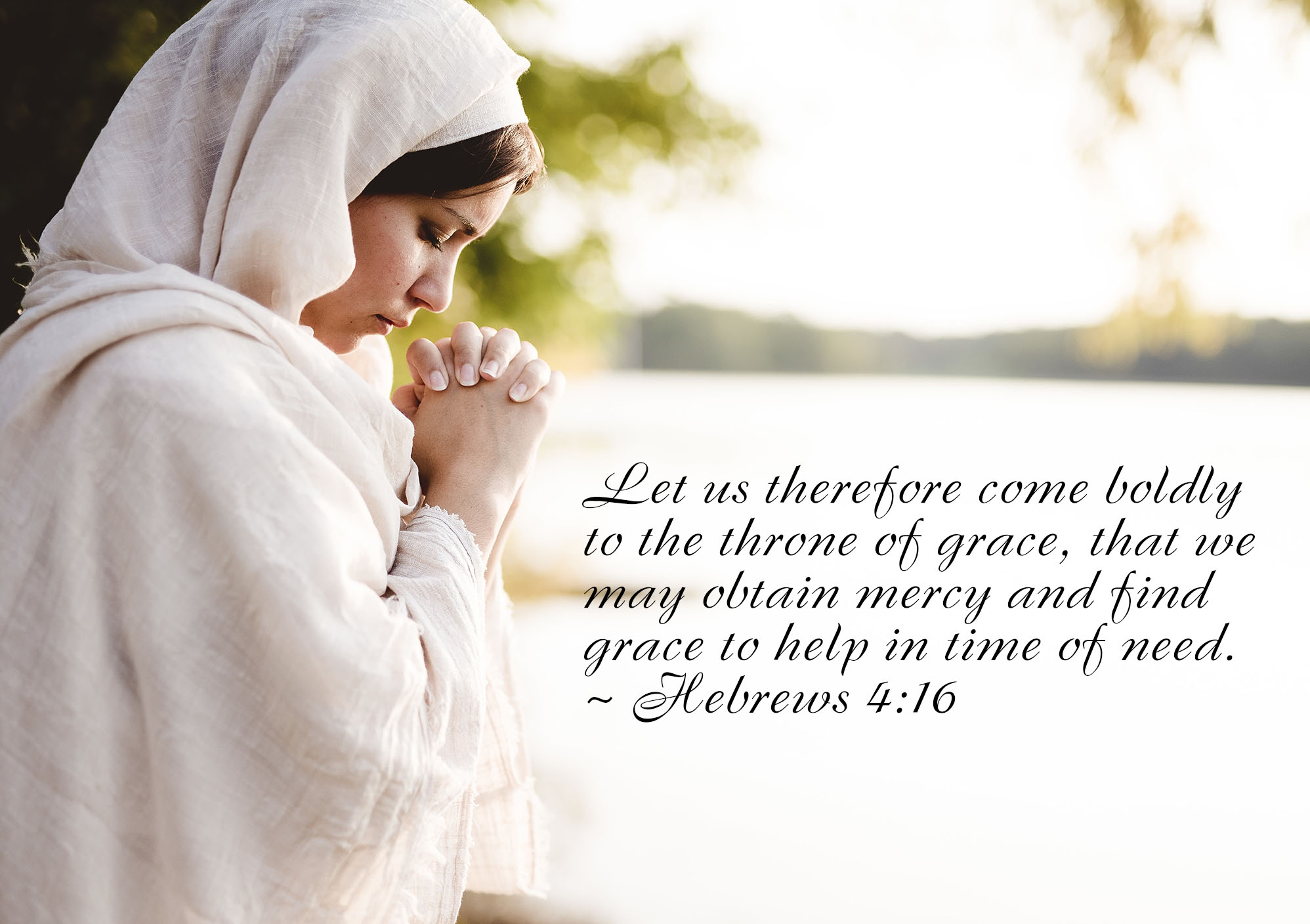
Let us therefore come boldly to the throne of grace, that we may obtain mercy and find grace to help in time of need. ~ Hebrews 4:16